
“Through the BINTI project, I have gained the ability to earn an income.The project has been life changing...Before, I was staying at home with no clear direction or purpose.” – Hidaya, BINTI participant
BINTI in Bloom: How Young Women in Zanzibar Are Growing a Better Tomorrow
By Inaara Merani & Ljilijana Medovarski | Tanzania
Written By: YCI Staff and Inaara Merani & Ljilijana Medovarski (HerStart Fellows)
What happens when you mix permaculture, therapy and gender equality?
In Zanzibar, Tanzania, 20 young women recently came together to take back control of their lives… and they’re just getting started.
From 2023-2024 the Practical Permaculture Institute of Zanzibar (PPIZ), a local organization passionate about sustainable farming, teamed up with Youth Challenge International through HerStart’s Partner Innovation Fund (PIF) to launch a pilot project that would change lives for local women. The project? BINTI – Believe in a New Tomorrow Initiative.
BINTI was designed to support young women who had experienced early pregnancies and child marriages, common challenges in Zanzibar due to deeply rooted cultural norms. Many of these women had faced gender-based violence (GBV), lost access to education, or were trapped in cycles of poverty and trauma.

Photo: Women participants of BINTI learning permaculture practices at a hands-on training
BINTI is Born
With the Partner Innovation Fund opportunity, PPIZ wanted to try something new. They weren’t just interested in farming skills or job training. They wanted to combine permaculture education, sexual and reproductive health (SRH) and mental health support into one holistic an empowerment program. They saw huge gaps to support women in these positions and took the PIF opportunity to test out some innovative ideas to address them.
BINTI – which means young woman in Swahili – was created as the acronym for the project, “Believe in a New Tomorrow Initiative”. A support program for vulnerable women who experienced early pregnancy and marriage, BINTI strived to support them through knowledge and skill development in permaculture, SRH and psychosocial wellbeing.
Why BINTI was Needed
Early marriage and teen pregnancies are unfortunately common in rural Tanzania. A 2022 survey found that 112 out of every 1,000 Tanzanian adolescents are affected, and many girls are pushed into adult roles before they even finish school. In Zanzibar’s South Unguja region where BINTI was based, this issue is especially severe. For girls with less education, the average marriage age is just 17.8, compared to 23.6 for girls who have completed secondary school.
“The early marriage and early pregnancy problem is deeper than we firstly imagined; we realized we only understood the tip of the iceberg. It is linked to many other problems such as poverty, environmental issues and participation into socio-economic activities.” – Agness, PPIZ staff & HerStart Trainer
So, with YCI’s support through the HerStart program, PPIZ created a solution that attempted to tackle everything, all at once.
The BINTI Approach
With support from YCI international volunteers and a local Gender Equality Consultant, BINTI rolled out an ambitious pilot program.
20 young women were selected and split into two smaller groups where they attended regular sessions on:
- Permaculture and farming skills
- SRH education
- Psychosocial therapy with a certified therapist
They learned how to grow crops, build compost, care for their mental health and connect with other women experiencing similar challenges. “We realized that the problem is deeper and it needs strategic planning and more engagement to be solved,” shared Agness who was involved in the project from start to finish.

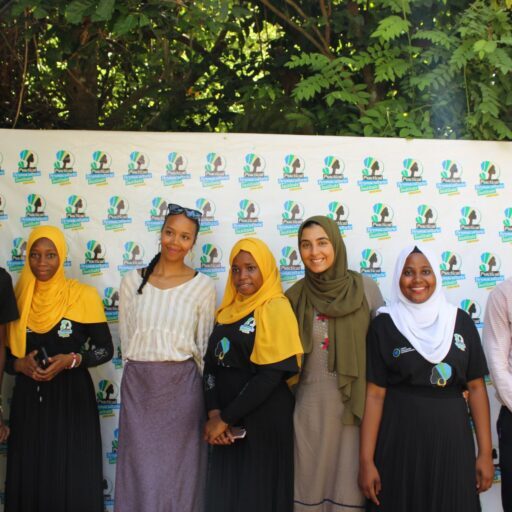
Photo: The implementing team of BINTI, including staff and volunteers from PPIZ and YCI.
Policy Change Starts from Within
While the women were transforming their lives, PPIZ was transforming as well.
Alongside the program, the organization conducted a Gender Analysis – an in-depth look at how their own practices could better reinforce gender equality. They realized that women in their community often lacked access to decision-making power, land ownership and income control. With help from HerStart Fellows, they created new gender-responsive policies to guide all future projects. These internal changes mean that the impact of BINTI will go beyond the initial group of 20 women.
Community Events that Sparked Change
To highlight their work, PPIZ and HerStart volunteers hosted three community events in Muyuni, bringing together over 250 people. Two events focused on advocating against GBV and promoting women empowerment. The third celebrated BINTI’s impact and shared results with the community. These events were powerful public spaces where women spoke openly about mental health, GBV and hope.
What Changed for the Women of BINTI?
BINTI emphasized the importance of mental health support along with practical skills training. Through creating a safe environment for survivors of GBV to meet with professionals, participants were able to strengthen their psychosocial wellbeing. This project allowed PPIZ to better understand the importance of integrating mental health into programs like BINTI.
“All beneficiaries went through traumatic experiences; it was necessary for them to have psychosocial support. They shared that attending the sessions gave them courage to move on with life and look on new opportunities.” – Agness, PPIZ staff & HerStart Trainer
“I am so thankful for the therapy sessions I received [in BINTI]; they have helped me a lot in tackling the suicidal thoughts and I have found new hope in life.” – Sikitu, BINTI participant
Before BINTI, many of the participants had no stable income and relied on harmful environmental practices to survive. After BINTI, they started compost and farming projects, gained confidence and even got jobs or continued their education.
Here’s what success looked like:
- New Farming Groups: Some BINTI graduates created agricultural groups and registered them with support from PPIZ. This gave them access to government support, funding and land from village leaders.
“Through the BINTI project, I have gained the ability to earn an income, and I now generate 350,000 TZS per month. The project has been life changing… Before, I was staying at home with no clear direction or purpose.” – Hidaya, BINTI participant
- Soil Media Centres: Two soil media centres were set up by PPIZ, where women could produce and sell clay products. These not only created long-term sources of income for the women, but they also contributed to the local community.
- Employment Opportunities: Two participants, Hidaya and ZamZam, were hired as permaculture gardeners at a local hotel thanks to the skills they gained during their training.
“During my off days, I also make fertilizer and sell it to vegetable farmers. I have gained self-confidence and have had the opportunity to speak within my community and family. I now have a platform where I can contribute and be heard.” – ZamZam, BINTI participant
- Educational Sponsorship: One BINTI participant even received a sponsorship for her diploma studies by the Southern Region Commissioner, Honourable Ayubu, who had previously attended a BINTI event.
- Increased Confidence and Advocacy: The participants developed a newfound confidence, especially when speaking about taboo and sensitive issues such as GBV. Through the BINTI training and support, these women now feel empowered to drive positive change and advocate for a future where gender equality can thrive.
“My husband tells me that the training has changed me a lot. He says since I came back from the BINTI program I am stronger, more confident and he is so proud of me.” – Chausiku, BINTI participant

Photo: HerStart international volunteers alongside PPIZ staff at one of the community engagement events in Zanzibar for BINTI.
Long-term Impact: Beyond the Pilot
While BINTI may have officially ended, the story isn’t over. PPIZ is keeping the momentum going. They’ve developed a new Gender Policy to future programs, integrated mental health support into their planning and prioritized hiring qualified women. PPIZ is also using the Women’s Autonomy Index (a tool they learned through HerStart) to track how women in their programs make decisions, control money and access opportunities.
“PPIZ has learned a lot about how psychosocial support is a very crucial part of any gender or GBV project… This will be incorporated in our future projects dealing with gender… We have taken the steps to mainstream women empowerment in our own organization, where the majority of our staff are women. This is a significant shift, especially in Zanzibar where many institutions, despite focusing on women’s issues, primarily employ men.” – Agness
BINTI wasn’t just a training program – it was a turning point. It was a story about growing confidence, building new futures and equipping women with the skills and opportunities to thrive. The women of BINTI didn’t just learn new skills, they rediscovered their worth. When we invest in women, our communities flourish.
Want to read more impact stories like this? Follow us on social media or check out our other Impact Stories to learn how HerStart is creating meaningful change globally.